
A machined manifold may appear clean from the outside while still containing burrs and debris deep inside its internal channels. Because those passages connect directly to valves, cylinders, pumps, sensors, and other fluid-control components, internal cleanliness can directly influence system reliability.
Deburring removes unwanted material created during machining, while cleaning removes loose chips, oils, residue, abrasive material, and other contamination before the manifold is assembled.
Machining Intersections
Burrs Inside Cross-Drilled Passages
Manifold circuits are often created by drilling holes from several exterior faces until the passages intersect inside the block.
When one drill breaks through into another hole, a sharp edge or loose burr can remain at the intersection.

These internal locations can be difficult to reach because they may be several inches from the nearest external opening.
Deburring Methods
Removing Machining Burrs
Deburring methods vary according to material, passage size, burr location, geometry, production volume, and cleanliness requirements.
Industrial deburring machinery includes equipment intended to remove unwanted edges and machining remnants from manufactured components.
Certain external parts can also be processed using equipment such as a parts tumbler, although deeply intersecting manifold passages may require methods capable of reaching hidden internal locations.
Contamination Control
Cleaning Internal Flow Passages
After machining and deburring, the manifold can still contain chips, fines, oils, coolant, cleaning media, or residue.
Cleaning procedures should address both visible external surfaces and the complete internal passage network.
The specific process depends on the manifold material, fluid service, contamination limits, passage geometry, and downstream components.
Fluid System Protection
Why Manifold Cleanliness Matters
Loose debris can move through the fluid circuit once a machine begins operating.
Particles can interfere with small valve clearances, damage seals, restrict orifices, contaminate actuators, and affect sensitive hydraulic, pneumatic, or process components.
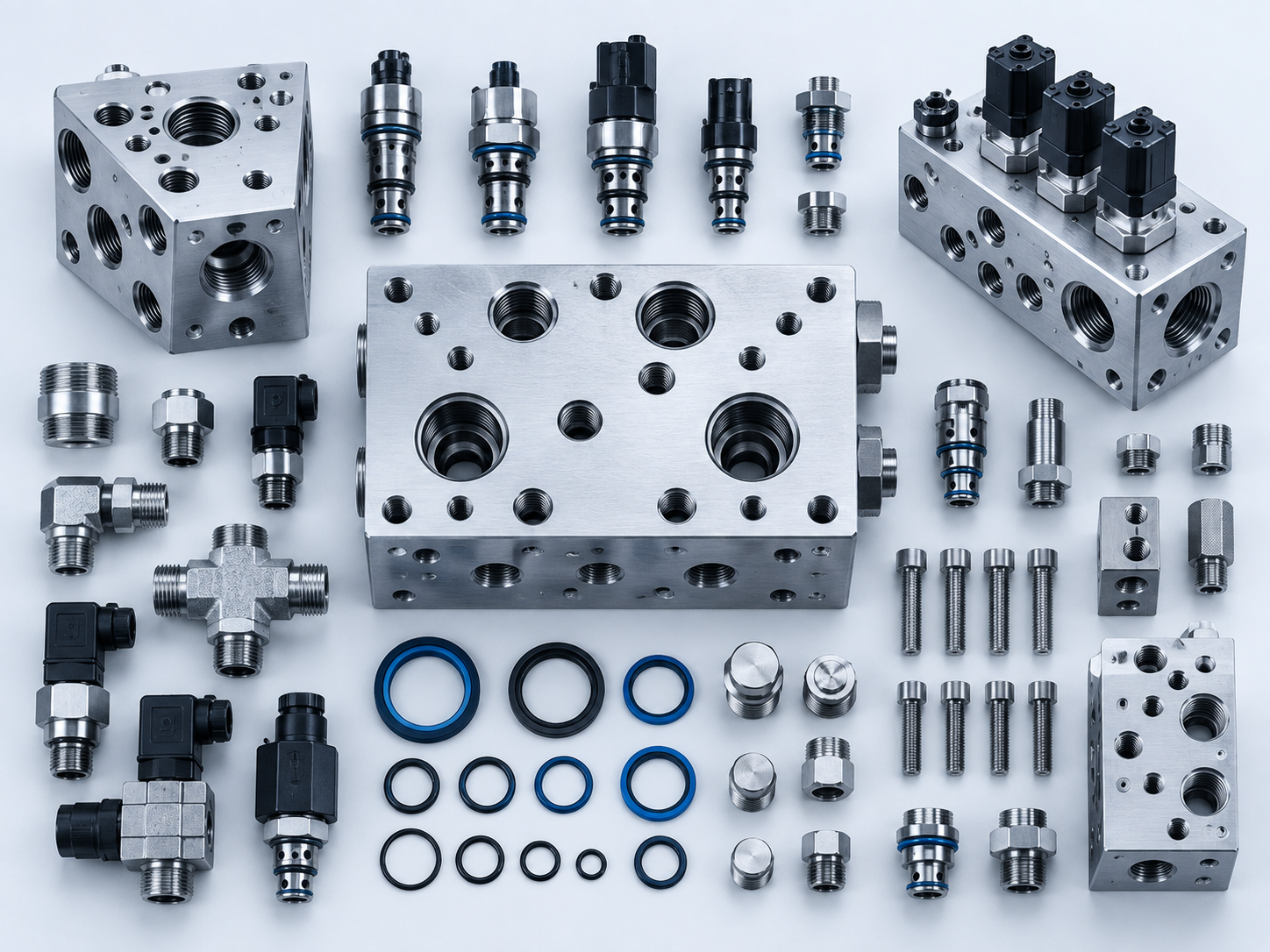
Cleanliness becomes especially important when a manifold contains cartridge valves, precision control elements, small passages, or instrumentation.
Plugged Passages
Cleaning Before Machining Openings Are Sealed
Some internal passages are created through access holes that are later closed with threaded plugs.
Those openings can provide useful access for inspecting, deburring, flushing, or cleaning passages before the final plugs are installed.
Once a passage is permanently closed, reaching the intersection behind it may become significantly more difficult.
Surface Finishing
Cleaning Around Surface Treatments
Surface treatments can introduce additional processing steps involving masking, rinsing, handling, or chemical exposure.
Finished manifolds may therefore require another controlled cleaning operation before final inspection and assembly.
Internal passages should remain free from residues or foreign material associated with the finishing process.
Manifold Surface Finishes →Verification
Inspecting Manifold Cleanliness
Final inspection can check accessible passages, ports, cavities, threads, and surfaces for visible debris and manufacturing remnants.
The inspection method depends on the complexity of the manifold and the cleanliness requirements of the finished fluid system.
Cleanliness verification can be incorporated into the overall quality process before pressure or leakage testing.
Testing & Inspection →Manufacturing Workflow
Designing Manifolds for Cleanability
Cleanability can be improved during the design stage by considering passage access, intersection locations, plug positions, blind cavities, machining sequence, and how cleaning fluid or inspection equipment will reach the internal network.
A circuit that is easy to draw but impossible to inspect or clean can create unnecessary manufacturing challenges.