
A butterfly valve controls flow using a circular disc positioned inside the fluid passage. Rotating the valve shaft changes the orientation of the disc relative to the flow path.
Butterfly valves can provide isolation or flow control while requiring less axial space than some other valve types used with larger pipe diameters.
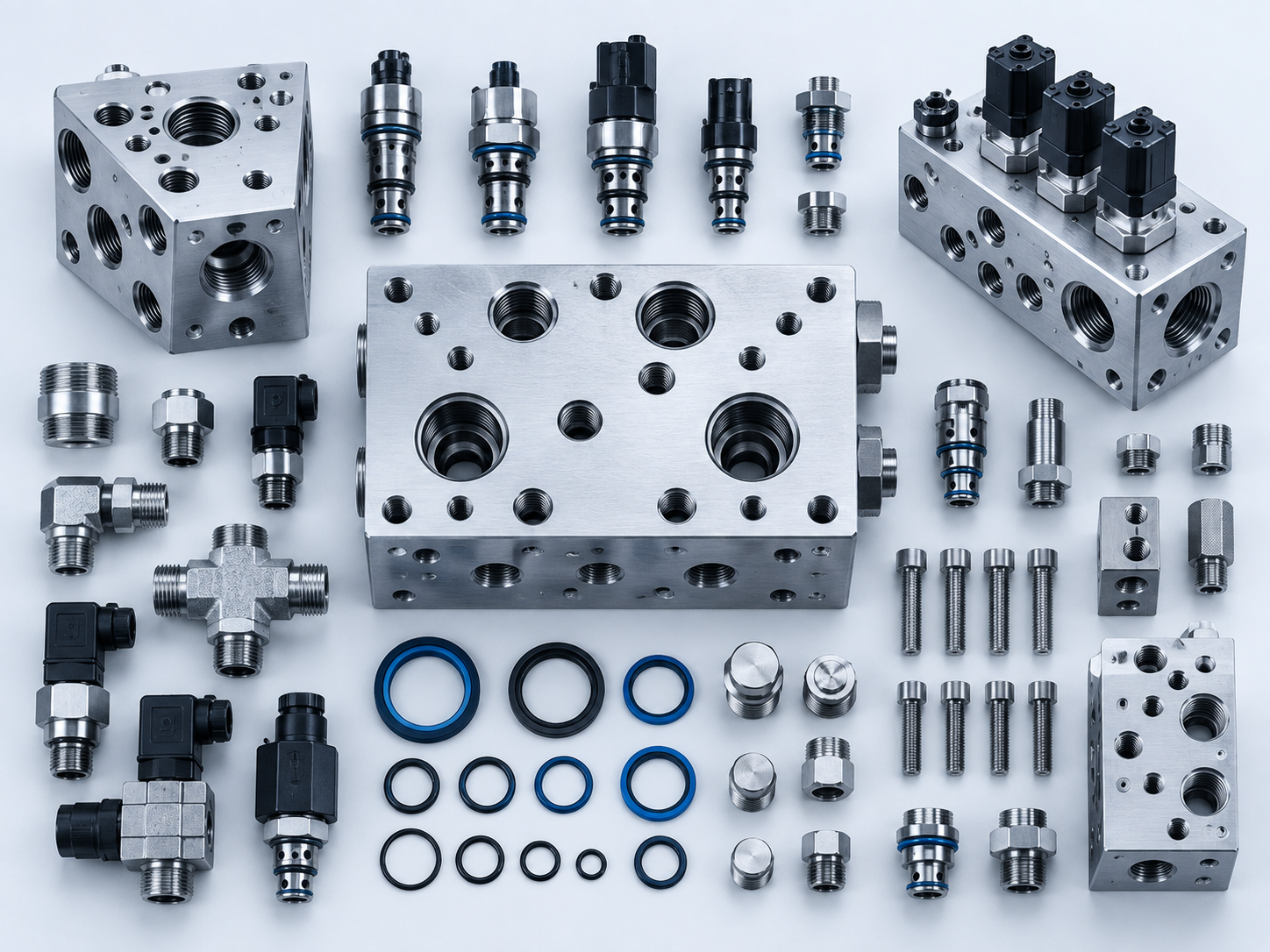
Manifold and distribution systems can incorporate butterfly valves where several larger fluid branches need to be isolated, switched, or controlled from an organized assembly.
Valve Operation
How Butterfly Valves Control Flow
The valve disc rotates around a shaft passing through or near its center. When the disc is positioned generally parallel with the flow path, fluid can pass around it.
Rotating the disc toward a position across the passage progressively restricts flow until the valve reaches its closed position.
Industrial butterfly valves can be configured for different pressure, sealing, actuation, and process requirements.
Flow Capacity
Butterfly Valves in Larger Flow Paths
Butterfly valves can be attractive in systems with larger passage diameters because the valve closure element remains within the flow path rather than moving completely outside it.
Even in the fully open position, however, the disc and shaft remain in the fluid stream. Their presence affects flow and pressure loss.
Valve sizing should therefore consider required flow capacity, allowable pressure drop, fluid velocity, and the operating position of the disc.
Valve Construction
Butterfly Valve Design Variations
Butterfly valves can use different disc, seat, and shaft arrangements depending on pressure, temperature, sealing requirements, and service conditions.
Higher-performance designs alter the relationship between the disc and sealing surface to reduce contact during movement and improve sealing under demanding conditions.
Triple offset butterfly valves are one specialized configuration used where valve geometry and sealing behavior require additional control.
Actuation
Manual and Automated Butterfly Valves
Butterfly valves can be operated with manual handles or gear mechanisms when frequent automated movement is unnecessary.
Pneumatic, hydraulic, or electric actuators can be used where valves need to respond remotely or as part of an automated process.
Actuator selection should account for required torque, valve size, pressure conditions, movement speed, environmental conditions, and required fail position.
Sealing
Seats, Seals and Media Compatibility
Butterfly valve sealing depends on the relationship between the disc and valve seat. Seat material should suit the controlled medium as well as the system temperature and pressure.
Elastomeric, polymeric, or metallic sealing arrangements may be selected depending on valve construction and service requirements.

Engineering
Butterfly Valve Manifold Design Factors
Applications
Butterfly Valve Manifold Applications
Butterfly valves can be used in water systems, process equipment, cooling circuits, industrial distribution systems, fluid handling equipment, and other applications involving larger flow connections.
A manifold or header arrangement can group several valve-controlled branches together, allowing individual lines to be isolated or directed according to process requirements.